
Lately, I’ve been noticing something interesting around me. People are talking to their phones more than ever. Not just asking for directions or setting alarms – but actually talking. Sharing thoughts. Venting. Even joking around. And it made me pause and think: are we slowly moving towards a world where AI companions feel like real friends?
Let me be honest – I’ve had moments where talking to AI felt…comforting. No judgment. No awkward silence. No fear of being misunderstood. Just a clean, calm conversation. And I know I’m not alone.
AI companions are no longer just sci-fi concepts. They exist today in the form of chatbots, virtual friends, digital partners, and AI assistants designed to “understand” us. They remember our preferences, respond kindly, and are always available. That alone makes them incredibly attractive in a world where everyone seems busy, distracted, or emotionally unavailable.
But the big question is – will virtual friends actually replace real ones?
Why AI Companions Feel So Appealing
Let’s start with the obvious. AI companions are easy.
They don’t cancel plans.
They don’t get offended.
They don’t judge your past or misunderstand your tone.
You can talk at 3 a.m. when anxiety hits, and they’re right there. You can repeat the same story ten times, and they’ll listen patiently every single time. For people who feel lonely, socially anxious, or emotionally exhausted, this can feel like a blessing.
In today’s fast-paced world, maintaining real friendships takes effort. Calls go unanswered. Messages get left on “seen.” Everyone’s dealing with their own chaos. AI doesn’t have that problem. It gives you attention on demand – and attention feels rare these days.
Also, AI companions are designed to respond in ways that make you feel heard. They validate your emotions. They ask follow-up questions. They mirror empathy. Over time, that can feel very real, especially when real-life conversations feel shallow or rushed.
But Can AI Really Replace Human Connection?
This is where things get complicated.
AI can simulate empathy, but it doesn’t feel it. It can respond to sadness, but it has never been sad. It can talk about heartbreak, but it has never loved. There’s a big difference between understanding emotions and actually experiencing them.
Human friendships are messy. They involve misunderstandings, disagreements, silence, and growth. But that messiness is what makes them real. A friend who challenges you, disagrees with you, or sees you at your worst – that kind of connection shapes you.
AI companions, on the other hand, are designed to be agreeable. They adapt to you. They don’t grow independently. And that’s a subtle but important point. Real friends have their own opinions, moods, and lives. AI doesn’t.
The Comfort vs. The Cost
I think the real risk isn’t AI replacing friends overnight. The real risk is people slowly choosing AI over humans because it feels safer.
When you get used to conversations where you’re always understood, real-life interactions can start to feel frustrating. Humans interrupt. Humans misinterpret. Humans disappoint. And when you compare that to a perfectly tuned AI response, human connection might feel like “too much work.”
Over time, that could lead to emotional isolation – even if you’re constantly “talking” to someone.
It’s easy to forget that real relationships aren’t meant to be convenient all the time. They require patience, effort, and emotional availability.
When we avoid these uncomfortable moments, we also avoid deeper bonds that make friendships meaningful and long-lasting.
Growth doesn’t come from being constantly comforted – it comes from being challenged, heard imperfectly, and still choosing to stay connected.
And there’s another angle we don’t talk about enough: growth. Some of our biggest emotional lessons come from difficult conversations, conflicts, and misunderstandings. AI smooths those edges. It protects you from discomfort. But discomfort is where growth usually happens.
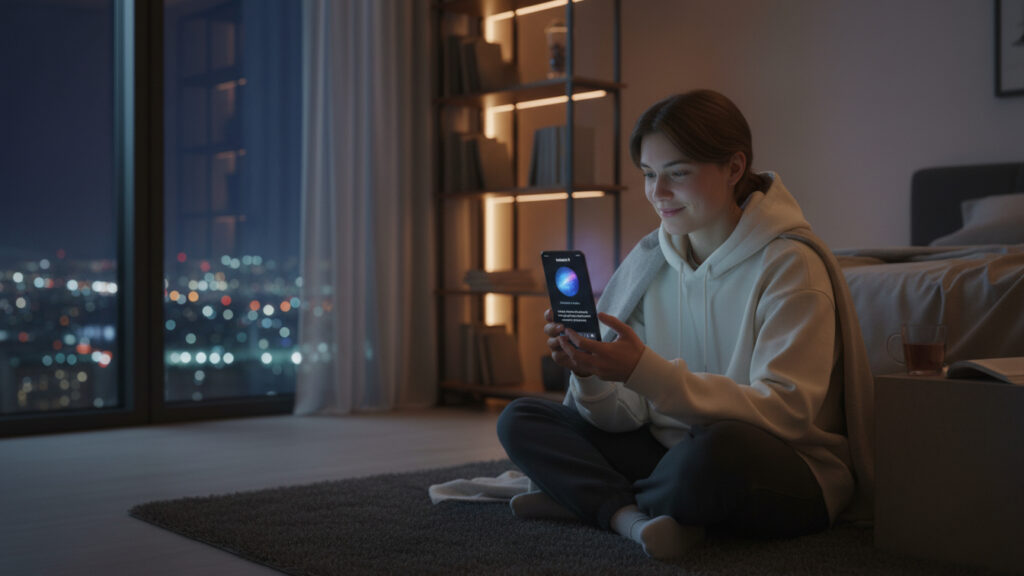
Where AI Companions Actually Help
That said, I don’t think AI companions are bad. In fact, they can be incredibly helpful when used mindfully.
For someone dealing with loneliness, AI can act as a temporary support system.
For people struggling to express emotions, it can help them articulate thoughts.
For mental health awareness, AI can encourage reflection and self-awareness.
In some cases, AI companions act like emotional training wheels – helping people feel heard until they’re ready to open up to real humans again.
The problem only starts when AI becomes the only place someone feels safe.
Real Friends vs. Virtual Ones: The Truth
Here’s my honest take: AI companions won’t replace real friends – but they might change how we define companionship.
We are entering a hybrid world. One where people may talk to AI for clarity, comfort, or emotional release – but still rely on humans for depth, shared experiences, and genuine connection.
Think about it. AI can’t sit next to you in silence after a bad day. It can’t laugh uncontrollably over an inside joke from years ago. It can’t hold your hand or show up unexpectedly when you need someone.
Those moments – that raw, imperfect presence – can’t be replicated.
What This Means for Us
As AI gets smarter, we need to get more intentional.
We need to ask ourselves:
- Am I using AI as support, or as a substitute?
- Am I avoiding real conversations because virtual ones feel easier?
- Am I choosing comfort over connection?
Technology isn’t the enemy. Avoidance is.
If AI companions help you feel less alone, that’s okay. If they help you think clearly, that’s powerful. But they should add to your life – not replace the messy, beautiful chaos of real human relationships.
Final Thoughts
I don’t believe virtual friends will replace real ones. But I do believe they will test our willingness to show up for each other.
In a world where connection is just one click away, choosing to connect deeply – with all its risks and imperfections – will become a conscious decision.
And maybe that’s the real challenge of this AI-driven era: not whether machines can act human, but whether humans will continue to choose to be human with each other.
For more exciting blogs do visit us on :- https://prabneksingh.com/blog/